Battle Analysis
In depth | Yongmunsan — how an outpost left alone far forward became the springboard for a division counterattack
· 1951-05-17 – 1951-05-20
Overview
Part 1: Yongmunsan (May 1951) told the main story; this piece looks at the smaller decisions inside it. From 17 May to dawn on 20 May 1951 the 2nd Regiment of the ROK 6th Division was attacked on the hills south of Cheongpyeong Lake by all three divisions of the Chinese 63rd Army; on the 20th the division linked up with it and went straight over to the counterattack [1]. Below we re-read the ground with real data, follow the scenario's phases, and compare the Korean, US and Chinese records.
Strategic and operational context
The Chinese Fifth Offensive (22 April–10 June 1951) was the largest and last of its kind [10]. On 11 May Eighth Army commander James Van Fleet gave IX Corps commander William Hoge special responsibility for the "Pukhan corridor", where the heaviest build-up had been reported, with most of the corps artillery and fire at five times the normal daily rate [2].
When the offensive opened on 16 May the main weight fell further east, on ROK III Corps and US X Corps [2]. A Chinese account gives the 19th Army Group a "feint in the west to pin down the Americans" [11], and the 63rd Army in the corridor was part of it. Yet the Korean record says the 63rd committed every division, its reserve included [1].
The 6th Division, broken at Sach'ang-ni in April, had something to prove. The 2nd Regiment had a new commander, Lieutenant Colonel Song Dae-hu [1]; the division was commanded by Chang Do-yong (photo 1).
 Photo 1. Chang Do-yong (c. 1952), commander of the ROK 6th Division at Yongmunsan — photo: unknown author, public domain (PD-South Korea), via Wikimedia Commons
Terrain and weather (OAKOC)
 Figure 1. Detailed map of Yongmunsan (approximate). Peaks, villages and water from OSM [19], heights from Open-Meteo [18]; the four outpost hills are placed relative to each other only — own work, based on sources 1–3
Observation. Elevation data give Hwayasan about 740 m, Dureungsan about 575 m and the Cheongpyeong dam only 25 m [18]. Hills 427 and 353 are named for their height, so the outposts overlooked the crossings. Lose them and the division lost its eyes.
Avenues of approach. The outpost area lies roughly 11–14 km (estimate) from the summit, and the frontage from Hwayasan to Dureungsan is about 22 km [19] — huge for one regiment. Approaches crossed the Hongch'on mouth, came up the Hongch'on valley toward Nasan, or crossed the Pukhan below the dam toward Ulupsan, which the reserve 189th used [1].
Key terrain. Hill 427, the highest and most central outpost [1]; for the division, the Yongmunsan massif.
Obstacles. The rivers and the lake behind the Cheongpyeong dam [19]. Every attacker had to cross water at sites that could be registered for fire. It rained 5.8 mm on the 18th and 10.1 mm on the 21st [17].
Cover and concealment. The hills were in full leaf. Sunset on the 19th was at 19:34 and sunrise on the 20th at 05:17 [17]; full moon fell at 05:45 UT on 21 May [20], with cloud cover around 50–60% [17].
Organization and command
Company dispositions and strengths are not in open sources; "estimate" marks assumptions.
| Side |
Unit (commander) |
Position / role |
Source |
| UN |
US IX Corps (Hoge) |
ROK 2nd, 6th; US 24th, 7th Divisions |
[2][3] |
| ROK |
6th Division (Chang Do-yong) |
corps centre, Yongmunsan |
[1] |
| ROK |
2nd Regiment (Lt Col Song Dae-hu) |
outposts south of the lake |
[1] |
| ROK |
1st / 3rd / 2nd Bn |
Nasan / Hill 353 / Hill 427, part of 2nd Bn on Ulupsan (estimate: a company) |
[1] |
| ROK |
19th, 7th Regiments |
main line (left and right, estimate); counterattack 20 May |
[1][3][8] |
| Neighbours |
31st Regt, ROK 2nd Div; 31st Inf, US 7th Div |
pulled back from Hwayasan and Duneungsan |
[1] |
| CPV |
19th Army Group |
feint and pin in the west (Chinese account) |
[11] |
| CPV |
63rd Army: 187th, 188th; 189th (reserve) |
main bodies from dawn 19 May; reserve against Ulupsan |
[1] |
The regiment held the ground, but the fire that kept it alive came from corps artillery and US aircraft [1][2]. The Chinese had numbers but thin firepower and supply, getting 40–50% of their needs [13].
Timeline
11–16 May
Van Fleet gave IX Corps the corridor on the 11th; from about the 13th the enemy seemed to shift east [2]. The offensive opened on the evening of the 16th. Both neighbouring regiments pulled back to their main lines, leaving the 2nd Regiment alone south of the lake [1].
17 May
A patrol drove a Chinese company out of the Bangha-ri valley, then came home when large-scale crossings began at dusk [1].
18 May
Company-sized crossings came in all day and were all repulsed under strong fire support [1]. The Chinese seem by now to have taken the outposts for the main line [1].
19 May, from dawn
The 187th and 188th Division main bodies tried to break through; then the reserve 189th hit Ulupsan. Casualties mounted and food and ammunition ran critically short [1].
Night of 19–20 May
Each battalion formed an all-round defence on its hill and fought hand to hand under illumination. Parts of the line were broken into and communications failed; the 1st and 3rd Battalions fell back onto the 2nd, and the regiment held until dawn [1].
20 May
The division linked up and counterattacked at once; the Korean record counts results from 0700 to 1800 [1]. IX Corps attacked the same day with four divisions abreast toward Line Georgia, and Hoge reprimanded his division commanders for not pushing hard enough [3].
21–23 May
On the 21st the Chinese–North Korean command ordered its main forces back to rest [12]. On the 23rd Hoge ordered pursuit and allowed bypassing groups up to company size; the 63rd and 64th Armies withdrew faster and Kap'yong was retaken [3].
The decision points in depth
p4x and p5w are what-ifs (figure 2).
 Figure 2. Decision flow, weather and light. ERA5 grid north of Yongmunsan [17]; full moon from the US Naval Observatory [20]; decision times are scenario settings — own work
p1 An outpost left alone (17 May 1800)
- Knew: neighbours gone; a force much larger than a company at several crossings (B2); corps fire registered on the crossings (A2); a rumour of an outflanking move by Hwayasan (C4).
- Options: withdraw onto the hills / hold with three battalions and request fire plans / spoiling attack / pull a battalion back.
- Actual: the regiment stayed and the patrol came in after dark [1]; who decided is not recorded.
- Otherwise: a spoiling attack leaves registered fire behind; a reserve leaves 22 km to two battalions; reacting to C4 thins the centre, where the blow came.
p2 Crossings at the river (18 May 1000)
- Knew: crossings at a different point each time (B3); fire available but ammunition tight (A2).
- Options: fire on crossings / counterattack / slope ambush / give up the bank.
- Actual: fire on the crossings; every attack repulsed [1].
- Otherwise: an enemy on the water is at his weakest; anything else spent the reserve or gave the enemy time to find gaps.
p3 The main bodies arrive (19 May 0530)
- Knew: a new enemy unit before Ulupsan (B2); half a day to bring up supplies (A2); a prisoner told the hills were the main position (C3).
- Options: hold / reinforce Ulupsan / shorten onto 427 / supplies first.
- Actual: held, with heavy casualties and critical shortages [1].
- Otherwise: if the enemy thought this was the main line, every hour held kept his main body in the wrong place.
p4 Before the night (19 May 1900)
- Knew: an assault was certain; no air after dark; flares and defensive fires ready (A2); massing between Nasan and 353 (B3).
- Options: hold each hill / close on 427 / withdraw / raid.
- Actual: all-round defence on each hill [1].
- Otherwise: closing early risks being caught moving; a dusk withdrawal becomes a retreat in contact (p5w).
p4x A hill broken into (19 May 2200, what-if)
- Knew (assumed): enemy inside one battalion, its radio dead; a runner (B2) and a straggler (D5) with conflicting news.
- Options: join the nearest hill / counterattack / withdraw.
- Against the record: positions were broken and the battalions joined the 2nd [1]; the scenario's advice is the same. Withdrawing on a D5 report gives the hill to a rumour.
p5 The night assault (20 May 0200)
- Knew: wires cut, radios intermittent; Hill 427 intact (B2); air only at first light, three hours off (A2).
- Options: close on 427 / each holds / withdraw / counterattack.
- Actual: the 1st and 3rd fell back onto the 2nd and held [1]; whether by order is not recorded.
- Otherwise: holding apart without communications risked piecemeal collapse. One perimeter gave the guns one ring and the link-up one place.
p5w In front of the main line (20 May 0600, what-if)
- Knew (assumed): outposts lost, the regiment mixed with stragglers near the main line, the enemy probing it.
- Options: go back up / reserve / screen.
- Against the record: it never happened [1]. Without the outposts the counterattack would have begun with recapture, not link-up.
p6 Time to counterattack (20 May 0700)
- Knew: the enemy had not reached the main line; Eighth Army counterattacking (A2); the enemy below disorganized (B2).
- Options: join at once / reorganize / patrol / pursue alone.
- Actual: immediate counterattack after link-up [1]; corps attacked too [3].
- Otherwise: patrolling gives the enemy time; pursuing alone isolates a spent regiment again.
p7 Back to the river (21 May 0800)
- Knew: first objective above the rivers, in step with neighbours (A1); stragglers on the south bank (B3).
- Options: advance with neighbours / cross first / reserve / clear the bank.
- Actual: four divisions advanced abreast [3]; the regiment's own moves are not recorded.
- Otherwise: crossing first meant swollen water and an open flank.
p8 The pursuit (22–23 May)
- Knew: bypass allowed up to company size (A1); columns withdrawing north (B3); a second-hand report of a hidden force (E5).
- Options: bypass / clear every choke point / halt.
- Actual: pursuit pressed, Kap'yong retaken, though few units got more than five miles [3].
- Otherwise: with the Chinese ordered back on the 21st [12], the pursuit was a race; halting on an E5 report ends it.
Reading it against doctrine
Combat outposts (FM 3-90, paras 13-7 to 13-9). A combat outpost is "a reinforced observation post capable of conducting limited combat operations", typically a reinforced platoon in all-round defence that should not seriously deplete the main body; units "plan to extract friendly forces from their outposts before enemy forces overrun them" [15]. Yongmunsan's outpost was a regiment and was not extracted. It became a forward defensive area.
Perimeter defence (paras 9-59, 9-60). Prescribed where a unit cannot tie in with neighbours or is isolated [15] — exactly the 2nd Regiment's case.
From defence to offence (paras 8-138, 8-142, 8-143). Transition when the enemy nears culmination, dispersed and weakened, and "should not wait too long"; units in contact fix the enemy while others attack [15]. The division used the 2nd Regiment as the fixing and link-up point.
Link-up and pursuit (para 20-1; paras 7-1, 7-3; para 4-21). Relieving an encircled force is a classic link-up; pursuit needs a deliberate decision because of the risk of isolation; bypass criteria must be stated and bypassed enemy handed off [15]. Hoge's "company size" rule was such a criterion [3].
Chinese practice. A 1951 IX Corps G-2 study found the Chinese massed manpower when short of firepower and crossed difficult ground for surprise [16]; the night assault and the western thrust fit.
 Figure 3. Yongmunsan phase by phase (18-second loop). With reduced motion only the final situation is shown; positions approximate — own work, based on sources 1–3
Source criticism
Claimed results. The Encyclopedia of Korean Culture gives the division's report for 0700–1800 on the 20th: 4,912 Chinese dead, 9 prisoners, against 5 ROK dead and about 200 wounded [1]. The monument at Cheonan-ri, Gapyeong claims 21,428 dead and 2,543 prisoners [5][6], over a much longer period including the cutting of retreat routes. IX Corps estimated over 73,000 enemy losses for the whole offensive (44,705 dead, 8,749 captured) against its own 341 dead, 2,011 wounded and 195 missing in May [3]. The English edition of a senior commander's memoir credits the 6th Division with 38,000 prisoners on 28 May [4]; that clashes with the corps' 8,749, yet the online transcription of the US history also reads "near thirtyeight thousand" for that day [3]. Only the printed originals can show which is a copying error. Even the smallest figure is one side's report.
Enemy identification. Korean sources consistently name the 63rd Army [1][5]. A 2024 column names the 60th Army and 180th Division [9], without a source and contradicted by every other source here.
What kind of attack. Korea says the Chinese mistook the outposts for the main line [1]; China says the 19th Army Group was feinting [11]. Both can be true: a pinning force may still commit its reserve against what it takes for the main line, and pinning fits the 63rd's quick withdrawal [3] after the 21 May order [12]. "Mistook" is itself a hedged inference.
Dates. The offensive began on the 16th [1][2], contact on the 17th [1], and one report starts the battle on the 18th [7]. The US official history skips the outpost fight [2][3].
Place names. The encyclopedia has the US 31st Infantry leaving "Duneungsan" (두능산) [1]; OSM has a "Dureungsan" (두릉산) at 37.650° N, 127.673° E, which fits the right-hand neighbour's sector [19]. Probably the same hill, unverified against 1951 maps; we give both.
Lessons
- An outpost's size shapes the enemy's judgement. A regiment-sized outpost can pass for the main line; plan fire and evacuation to match.
- Fire on the enemy while he is on the water. Registered crossings let one regiment hold 22 km.
- Fix before dark where to gather if broken. Assume communications will fail.
- A counterattack's first objective is the isolated friendly unit. Link-up first, pursuit second.
- Do not move troops on low-grade reports. C4, D5 and E5 information justifies vigilance, not a new layout.
Unresolved questions
- Who decided to hold the outposts: regiment, division or corps.
- Exact locations of Ulupsan, 427, 353 and Nasan.
- Whether the battalions closed on 427 by order or initiative.
- The 19th and 7th Regiments' positions and axes.
- Strengths and losses on both sides; Chinese figures for the 63rd Army were not found.
- Whether Duneungsan and Dureungsan are the same hill.
- The 1983 volume Yongmunsan Jeontu, the MND History of the Korean War vol. 9 and the division's combat reports were not consulted; the ROK Army is restoring and digitizing such records [14].
Further viewing and reading
▶KFN episode on the Yongmunsan battle, told through a 6th Division reconnaissance soldierVideo (Korean): 'I am a soldier of the Republic of Korea', ep. 126 — Yongmunsan, key point of the central front · KFN (MND Agency for Defense Media), year not stated
▶KFN history episode on the counteroffensive after Yongmunsan and the Paro reservoir battleVideo (Korean): 'Yeokjeon Dabang' ep. 145, Paro reservoir — the counteroffensive after Yongmunsan · KFN (MND Agency for Defense Media), year not stated
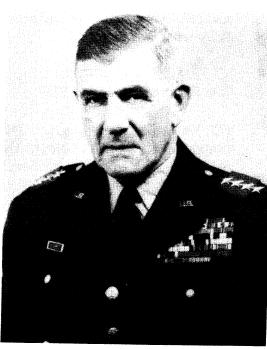 Photo 2. William M. Hoge (1954). In May 1951 he commanded US IX Corps in the Pukhan corridor — photo: U.S. Army, public domain, via Wikimedia Commons
- Command the 2nd Regiment yourself in the training scenario "Yongmunsan".
Sources
- Academy of Korean Studies, Encyclopedia of Korean Culture, "Yongmunsan jeontu" (Battle of Yongmunsan); references include MND Institute for Military History, 6·25 jeonjaengsa vol. 9 (2012). https://encykorea.aks.ac.kr/Article/E0039489 (accessed 2026-10-13)
- Billy C. Mossman, Ebb and Flow, November 1950–July 1951, US Army Center of Military History, 1990, ch. 25 "Battle Below the Soyang" (online transcription; the original site was unreachable). https://www.koreanwaronline.com/history/EbbAndFlow/Ch25.htm (accessed 2026-10-13)
- Same work, ch. 26 "The Counteroffensive" (online transcription). https://koreanwaronline.com/history/EbbAndFlow/Ch26.htm (accessed 2026-10-13)
- Paik Sun-yup (then commander, ROK I Corps), serialized memoir 60 years with the military, "Chinese break through UN line", Korea JoongAng Daily, 2010-11-14. https://www.koreajoongangdaily.com/lifestyle/playing-defensechinese-break-through-un-line/11358122 (accessed 2026-10-13)
- Ko Chang-su, "Visiting Gapyeong's war monuments" (in Korean), Kyeonggi Ilbo, 2011-06-06. https://www.kyeonggi.com/article/201106060408788 (accessed 2026-10-13)
- Im Bong-jae, "Gapyeong, where the spirit of the war dead lives on" (in Korean), Aju Business Daily, 2011-05-26. https://www.ajunews.com/view/20110526000553 (accessed 2026-10-13)
- Choi Hyeon-jun, "Yangpyeong Cultural Center holds 14th memorial service for the fallen of Yongmunsan" (in Korean), News Seoul, 2023-05-22. https://newsseoul.co.kr/news/view/1065583813846417 (accessed 2026-10-13)
- Lee Dae-yong (memoir), "The Korean War as I lived it", final part (in Korean), Seoul Shinmun, 1991-06-28. https://www.seoul.co.kr/news/1991/06/28/19910628005001 (accessed 2026-10-13)
- Mark Peterson, "The Chinese in the Korean War", The Korea Times, 2024-06-23. https://www.koreatimes.co.kr/amp/opinion/20240623/brutality-humanity-in-korean-war (accessed 2026-10-13)
- National Archives of Korea, "Chinese intervention and the UN re-counteroffensive (19 Oct 1950–9 Jul 1951)" (in Korean). https://theme.archives.go.kr/next/625/process/china-intervention.do (accessed 2026-10-13)
- China Shuangyong magazine, "The largest campaign: the Fifth Campaign" (in Chinese), published on The Paper, 2020-10-09 (Chinese account, cited as a claim). https://m.thepaper.cn/baijiahao_9507428 (accessed 2026-10-13)
- CCTV, Resist America, Aid Korea, episode 9 (in Chinese), on 12371.cn, 2020 (Chinese account, cited as a claim). https://www.12371.cn/2020/11/04/VIDE1604437081145462.shtml (accessed 2026-10-13)
- Jeong Hyeon-yong, "The unstoppable Chinese human waves came undone over roasted-grain flour" (in Korean), Seoul Shinmun, 2024-06-23. https://m.seoul.co.kr/news/2024/06/23/20240623500037 (accessed 2026-10-13)
- Kim Ye-won, "ROK Army opens its Korean War records restoration facility for the first time" (in Korean), News1 (via Daum), 2025-06-24. https://v.daum.net/v/20250624090141111 (accessed 2026-10-13)
- Headquarters, Department of the Army, FM 3-90 Tactics, 2023-05-01 (ch. 4 para 4-21; ch. 7 paras 7-1, 7-3; ch. 8 paras 8-138, 8-142, 8-143; ch. 9 paras 9-59, 9-60; ch. 13 paras 13-7 to 13-9; ch. 20 para 20-1). https://armypubs.army.mil/epubs/DR_pubs/DR_a/ARN38160-FM_3-90-000-WEB-1.pdf (accessed 2026-10-13)
- HQ IX Corps, G-2 Section, Enemy Tactics, Techniques and Doctrine, Korea, 1951-09-14 (National Diet Library scan; Wikimedia Commons file description). https://commons.wikimedia.org/wiki/File:NDL3540894_350.05-_HQ_IX_Corps,_G-2_Section,_Enemy_Tactics,_Techniques_and_Doctrine,_Korea.pdf (accessed 2026-10-13)
- Open-Meteo, Historical Weather API (ERA5 reanalysis), grid north of Yongmunsan, 15–28 May 1951. https://archive-api.open-meteo.com/v1/archive?latitude=37.66&longitude=127.53&start_date=1951-05-15&end_date=1951-05-28&daily=temperature_2m_max,temperature_2m_min,precipitation_sum,sunrise,sunset,cloud_cover_mean&timezone=Asia%2FSeoul (accessed 2026-10-13)
- Open-Meteo, Elevation API, Yongmunsan, Hwayasan, Dureungsan, Borisan area. https://api.open-meteo.com/v1/elevation?latitude=37.562,37.6716,37.6496,37.6497,37.6635,37.6898,37.7256&longitude=127.549,127.4279,127.6727,127.5354,127.5274,127.5885,127.4212 (accessed 2026-10-13)
- OpenStreetMap Nominatim and Photon, coordinate searches for Dureungsan, Hwayasan, Gaseopbong, Cheongpyeong Lake, Hongch'on River and Bangha-ri. https://nominatim.openstreetmap.org/search?q=%EB%91%90%EB%A6%89%EC%82%B0&format=json&limit=4&countrycodes=kr · https://photon.komoot.io/api/?q=%ED%99%8D%EC%B2%9C%EA%B0%95&limit=8&lat=37.75&lon=127.53 (accessed 2026-10-13)
- US Naval Observatory, Astronomical Applications API, moon phases 1951. https://aa.usno.navy.mil/api/moon/phases/year?year=1951 (accessed 2026-10-13)
- Wikimedia Commons, File:Chang Do-young.jpg (unknown author, PD-South Korea). https://commons.wikimedia.org/wiki/File:Chang_Do-young.jpg (accessed 2026-10-13)
- Wikimedia Commons, File:William Hoge.jpg (U.S. Army, public domain). https://commons.wikimedia.org/wiki/File:William_Hoge.jpg (accessed 2026-10-13)